Regulation D is a set of SEC rules that allows companies, funds and other issuers to raise capital without registering a full public securities offering. Instead of filing a registration statement like Form S-1, an issuer may rely on a private offering exemption if it follows the conditions of the relevant rule. For investors, Regulation D is important because many private funds, startups, real estate vehicles, SPVs and private companies use it to sell securities outside the public market. The most common Regulation D exemptions are Rule 506(b) and Rule 506(c). Rule 506(b) generally allows an issuer to raise an unlimited amount of money from accredited investors and a limited number of non-accredited but sophisticated investors, but it does not allow general solicitation. Rule 506(c) allows general solicitation, but all purchasers must be accredited investors and the issuer must take reasonable steps to verify that status. This difference is central because it affects how the offering can be marketed and who can legally invest.
Rule 504 is another Regulation D exemption, often used for smaller offerings. It generally has a lower offering limit than Rule 506 offerings and may interact more heavily with state securities laws. By contrast, Rule 506 offerings are “covered securities” under federal law, which means states generally cannot require full registration, although they may require notice filings and fees. Investors should still remember that exemption from registration does not mean exemption from anti-fraud rules.
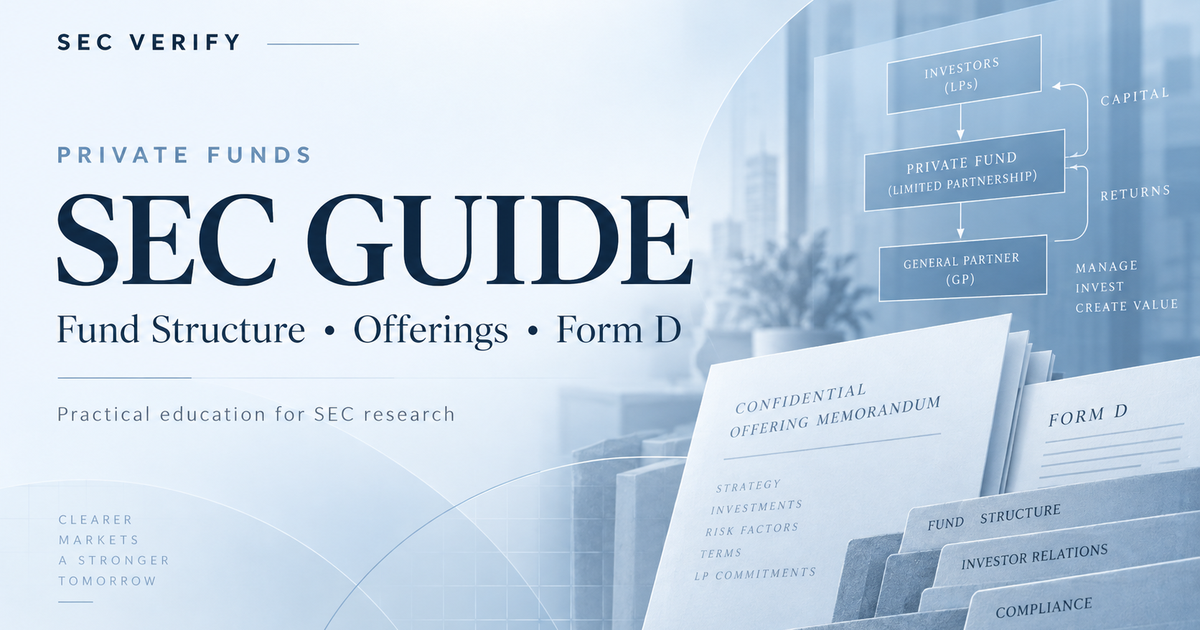
Issuers relying on Regulation D commonly file Form D with the SEC after the first sale. Form D is a notice filing, not an approval document. It may disclose the issuer’s name, address, related persons, exemption relied upon, offering amount, amount sold, investor count, minimum investment and sales compensation. However, Form D usually does not include the private placement memorandum, financial statements, asset details, full investor list, fee structure or complete risk disclosure.
A Regulation D filing should therefore be read as a starting point, not a seal of legitimacy. Investors should ask what the issuer actually does, who controls it, whether the manager or sponsor has a regulatory history, whether offering documents exist, how proceeds will be used, what fees are charged, whether securities are restricted, and how investors can exit. A clean Form D filing does not prove that the business is strong, audited, profitable or SEC-approved.
Regulation D is useful because it gives private issuers a legal capital-raising path, but it also leaves more due diligence burden on investors. Public offerings come with extensive disclosure and review processes; private offerings may provide far less public information. Anyone reviewing a Regulation D issuer should compare Form D with EDGAR history, adviser records, company websites, state filings, litigation searches, offering documents and any available third-party evidence before drawing a conclusion.
KEY POINTS:
- Regulation D provides SEC exemptions for certain private securities offerings.
- Rule 506(b) generally prohibits general solicitation, while Rule 506(c) permits it only with accredited investor verification.
- Form D is a notice filing, not SEC approval of the offering.
- Regulation D offerings remain subject to anti-fraud rules.
- Investors should conduct independent due diligence because Form D often omits financial statements, offering documents and full risk details.